Private credit grew from $1.1 trillion in 2010 to $2 trillion at the start of 2025.
Tokenized private credit hit $20.48B in active loan value by late 2025, up from under $8.9B a year earlier. That’s 56% growth in twelve months. Strip out stablecoins and repos, and private credit is now 61% of everything tokenized.
So this is the largest and fastest-growing segment of the tokenization market. And I keep having conversations with smart people, allocators included, who can’t tell me what’s actually being tokenized in these deals.
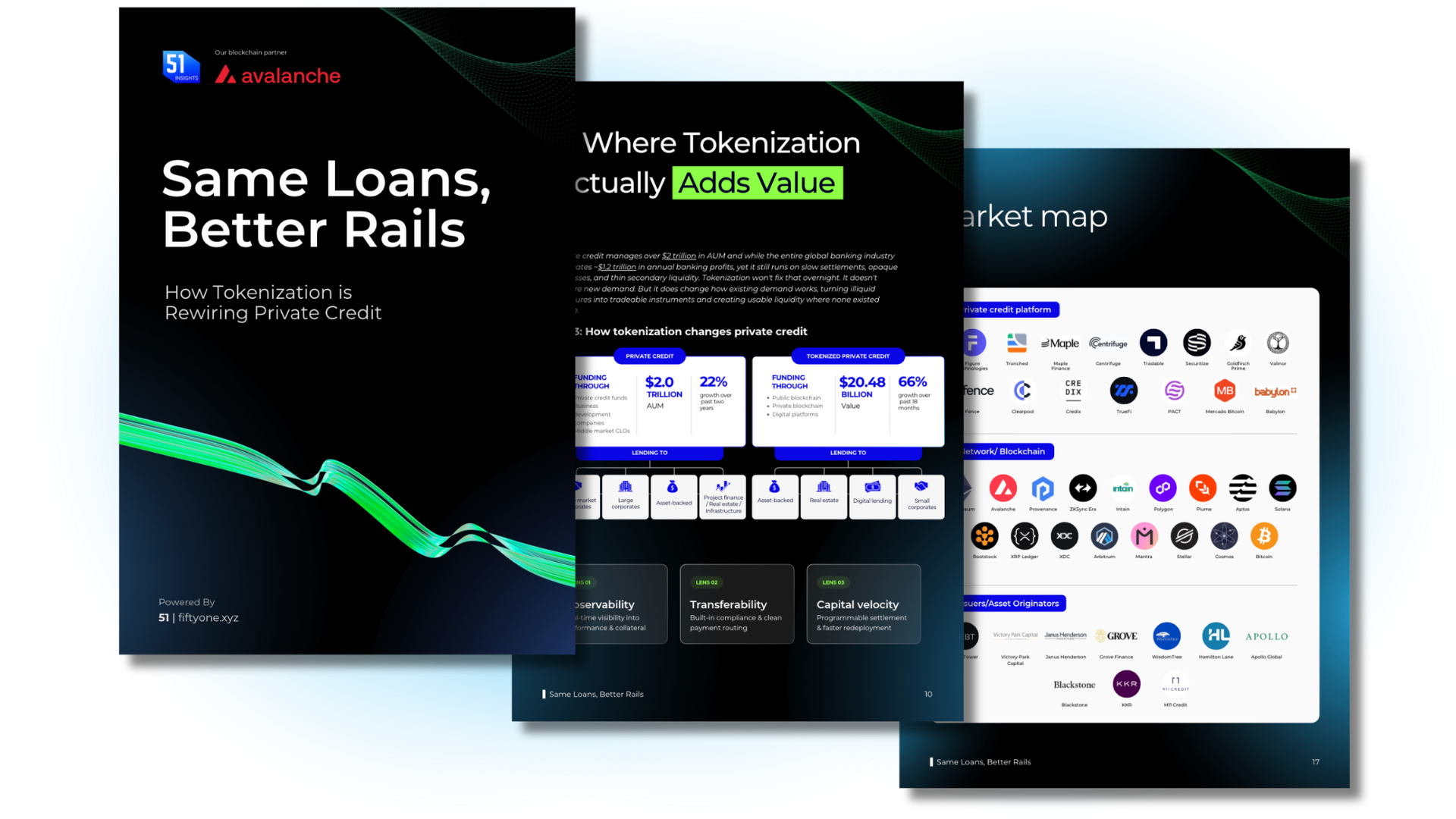
That is why we wrote our new report together with Avalanche.
Here’s the uncomfortable truth about most “tokenized private credit” to date: it tokenizes the wrapper, not the loan.
A fund share gets minted as a token. The token gets looped through DeFi yield strategies. Leverage goes up, returns amplify on the way up. Meanwhile the underlying credit sits untouched. The borrower notices nothing. The originator still knows far more than the investor does.
Tokenizing the substance means the loan itself changes shape. Collateral becomes a verifiable on-chain object. Repayments settle in stablecoins as they happen. Covenants run as code instead of language a lawyer checks quarterly, and the servicing waterfall executes itself.
The report draws a hard line between these two approaches, because I think the second one is where the next decade of value sits. The first one is mostly leverage wearing a costume.